2023 was a big year for CRISPR-based gene editing but challenges remain
By Malak Saleh,
Engadget [Cites CGS' Katie Hasson]
| 12. 20. 2023
2023 was an important year for patients with sickle cell disease. Prior to CRISPR, the only cure for the life-long ailment was a bone marrow transplant, which is notoriously dangerous and costly. This month, the FDA approved Vertex’s “Casgevy,” a CRISPR-based therapy for the treatment of sickle cell disease in patients 12 and older. The landmark approval made the therapeutic the first genetically edited therapy to reach the general market.
Casgevy, which also received the greenlight from regulators in the UK for another blood disorder called beta thalassemia, works by being administered in a single-infusion of genetically modified stem cells to a patient. Clinical study participants that took Casgevy were free from symptoms associated with sickle cell disease, like periodic episodes of extreme pain due to blocked blood flow through vessels, for up to a year.
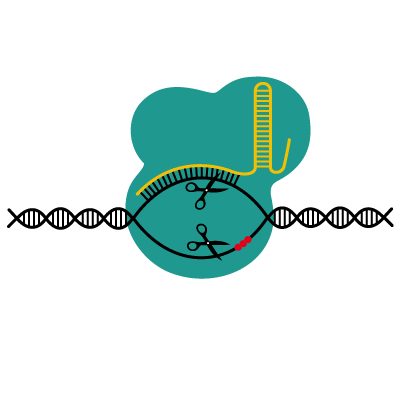
CRISPR, which modifies precise regions of a human’s DNA strands, was once thought to be a far off scientific innovation. Human cells were first modified using CRISPR in clinical trials in China back in 2016. Less than a decade...
Related Articles
By Erik Adams, Sundance | 09.08.2026
The scariest movie playing at the 2026 Sundance Film Festival isn’t about cursed audio recordings or a killer demon disguised as your true love; rather it’s a 110-minute essay film about how a handful of guys obsessed with numbers and...
By Katie Bo Lillis and Zachary Cohen, CNN | 09.18.2026
The intelligence report, circulated across the US military this spring in the midst of the war with Iran, immediately set off alarm bells: A Chinese ship in the Middle East was transporting components of a nuclear weapons program.
The US...
By Miryam Naddaf, Nature | 09.21.2026
A wave of epigenetic therapies is offering hope as ways to cure chronic hepatitis B — a lingering liver infection that is caused by the hepatitis B virus (HBV) and affects more than 250 million people around the world. Currently...
By Karen Weintraub, Endpoints News | 09.16.2026
To better understand certain neuropsychiatric disorders, researchers at Stanford University have bred rodents that lack a cortex and hippocampus and then replaced those missing brain cells with human ones.
The altered mice, a scientific first, provided insights that would not...