The Fragility of Women's Rights in Afghanistan
By Heather Barr,
Human Rights Watch
| 08. 24. 2021
Now that the Taliban are back, what does that mean for women's rights?
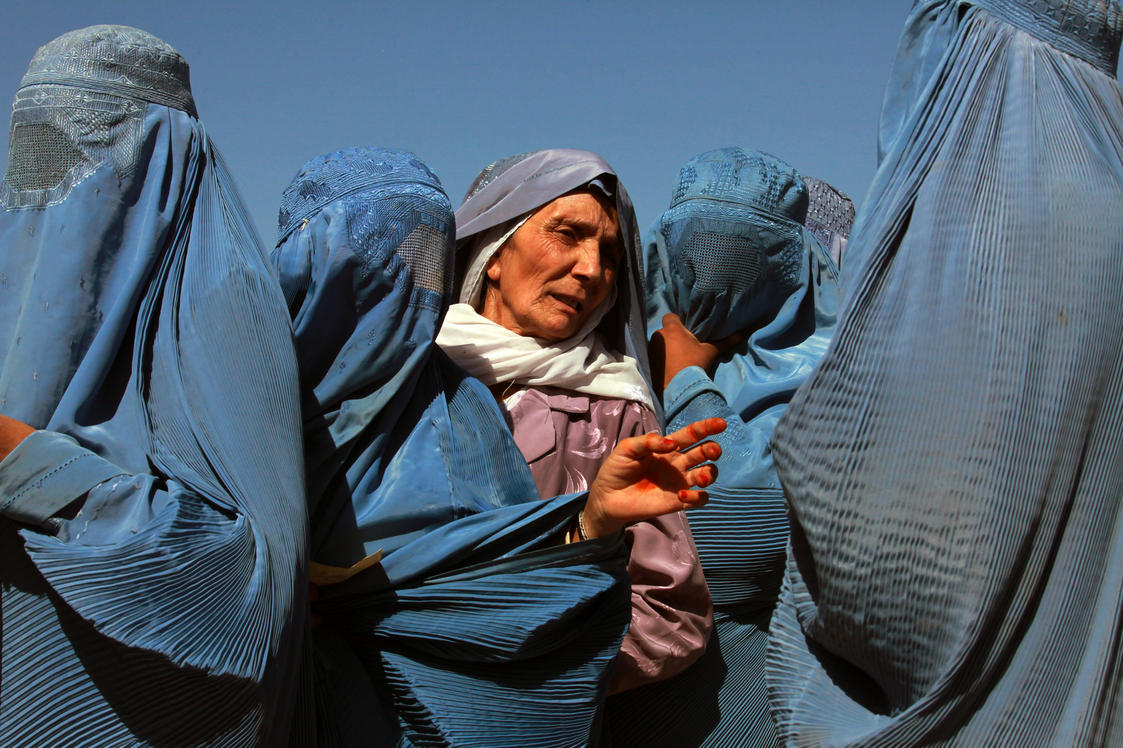
Photo by United Nations Photo on Flickr
“But can we trust the Taliban on women’s rights?” has been a favorite question of journalists in recent years. The answer used to be “no”; the answer now is that it doesn’t matter much. The Taliban have swept back to power, and dealing with them is the reality, again, for Afghan women and girls.
It became a cliché over the last decade to say that Afghan women were facing an uncertain future, as the Taliban steadily expanded their territory. On August 16, some of the uncertainty ended — and was replaced with fear and despair — as President Ashraf Ghani fled the country and the Taliban, triumphant after taking most of the rest of the country, entered Kabul, the capital.
The Taliban tweet these days, which is new, but aside from that, they haven’t changed much. When they wanted to seem presentable to the international community during negotiations in Doha, their rhetoric about women’s rights shifted. They pledged to let girls study and women work — but usually with a vague...
Related Articles
By Anna Collinson and Jo Adnitt, BBC | 08.18.2026
At least 30 children, most of them British, are feared to have been conceived by IVF treatment in northern Cyprus using the wrong sperm or egg donors.
In each case, the parents suspect they did not get the donors they...
What We Inherit by Sam Trejo and Daphne O. Martschenko; and Original Sin by Kathryn Paige Harden have a great deal in common, with substantial differences in style and emphasis. Both books attempt, in different ways, to show the reader just where current research into human genomics stands, where that might be going, and why the authors are interested. In short, the influence of genomic research on our societies is already large and seems likely to change them in ways...
By Dan Falk, Nautilus | 08.20.2026
The pseudoscience of eugenics, founded on the mistaken notion that nature envisions some “right” combination of genes, and that selective breeding can improve the human race, is making a comeback. While the heyday of eugenics was a century ago, the...
By Editors, Nature | 08.18.2026
Shinya Yamanaka doesn’t see himself as a celebrity. But people do recognize the stem-cell researcher when he’s out for a run, often while training for a marathon, on the streets of Kyoto, Japan.
Many of them call out words of...