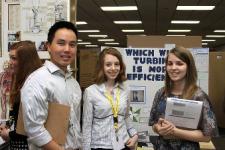
As an industry giant invests in science fairs, we all invest (for better or worse) in biotech
By Carl Zimmer,
STAT
| 05. 26. 2016
Untitled Document
At the American Museum of Natural History, the venerable Science Talent Search announced Thursday that it was changing sponsors for the second time in its 74-year history.
In 1942 Westinghouse became the corporate partner for the nation’s largest research competition for high school students. In 1998, Intel took over as a sponsor for the next 18 years. Now it’s handing off to Regeneron Pharmaceuticals.
That’s a telling sequence — one that speaks to how science fairs have been a microcosm for how we look to science to help our country thrive, and how we’ve looked to different kinds of science along the way.
Continue reading on STAT
Image via Flickr
Related Articles
By Gay Pasley, Essence | 09.04.2026
That is what makes the unfolding case of McKenna West so important. It is more than a disagreement about abortion or a dispute over a surrogacy contract. It asks whether an agreement signed before a pregnancy can become authority...
By Anna L. Philippe, Pop Panic | 09.17.2026
What does it mean when education is considered a threat to population? As an education student, I am interested in the ways population panics are essentialized and circulated in formal education settings. Schools can play a major role in shaping...
By Ava Kofman, The New Yorker | 09.15.2026
A WOMAN WHO ACTS AS A SURROGATE, carrying a child for someone else, is said to be going on a “journey.”
Kayla Elliott started her surrogacy journey at the age of twenty-six. She gave birth to a baby girl for...
By Terence Keel, Los Ángeles Review of Books | 09.06.2026
This is the 16th installment in the Legacies of Eugenics series, which features essays by leading thinkers devoted to exploring the history of eugenics and the ways it shapes our present. The series is organized by Osagie K. Obasogie in...